
HOW TO MAKE TAX SEASON EASIER AS A REAL ESTATE AGENT
Learn how real estate agents can simplify tax season with better expense, mileage, and closing tracking throughout the year.
By: Christian Tiessen | 03/24/2026

For many real estate agents, tax season brings a familiar feeling: stress.
Receipts are hard to find.
Expenses need to be pieced together.
Mileage gets estimated.
Bank statements turn into long guessing sessions.
What should be a simple process often turns into hours of frustration.
But here’s the truth: tax season itself usually isn’t the real problem.
The stress comes from how your financial information is tracked throughout the year.
When you have a simple system in place, tax season becomes much easier and far less overwhelming.
Why Tax Season Feels So Stressful for Real Estate Agents
Real estate agents operate differently than most professionals.
As an independent contractor, you are responsible for tracking your own expenses, miles, income from closings, and business records.
Unlike traditional jobs where taxes are handled automatically, everything depends on your own tracking.
The challenge is that most agents are focused on showings, clients, negotiations, and closing deals.
So, financial tracking often gets pushed aside.
At first, it doesn’t seem like a big issue...
But over time, small gaps turn into major problems:
Receipts get scattered
Expenses are only partially tracked
Mileage is forgotten
Closings are inconsistent
By the time tax season arrives, you’re trying to rebuild an entire year of activity.
That’s why many agents eventually realize they need a better system. CLICK HERE to read more about that.
The Biggest Problem: Rebuilding Your Expenses
One of the most time-consuming parts of tax preparation is reconstructing expenses.
Many agents open their bank statements and try to remember:
What each charge was for
Whether it was business-related
If it qualifies as a deduction
This process is slow and frustrating.
More importantly, it’s unreliable.
Details fade over time. What would have taken seconds to log earlier can take hours to figure out later.
This is also where small mistakes happen... missed deductions, incorrect classifications, or incomplete records.
These issues can lead to unnecessary stress or even problems at tax time.
If you want to avoid that, the solution is simple:
Track expenses when they happen (or at the end of the week).
Receipts Are Easier to Manage Than You Think
Receipts are another major pain point during tax season.
They show up in different places:
Email inboxes
Paper copies
Photos on your phone
Random places like your car or desk
When tax season arrives, many agents realize they’re missing documentation.
The easiest way to fix this is to attach receipts to the log at the moment the expense happens.
When you log an expense and store the receipt in the same place, everything stays organized automatically.
For example, using a simple financial tracking system like LEDGNT allows you to attach receipts directly to each expense.
That means no searching later. Everything is already where it should be.
Consistent record-keeping like this removes a huge amount of stress when it’s time to prepare taxes.
Mileage Is One of the Most Missed Deductions
Agents spend a lot of time driving.
Showings
Listing appointments
Inspections
Closings
Broker meetings
All of that driving adds up—and it can lead to significant tax deductions.
The IRS provides a standard mileage deduction each year.
But here’s the problem:
Mileage is one of the most commonly missed deductions.
Why? Because it’s nearly impossible to reconstruct later.
Most agents simply can’t remember every trip they made months ago.
When mileage isn’t tracked consistently, those deductions are lost or inaccurately measured.
Tracking mileage throughout the year ensures you capture the full value of your business driving.
A Simple Weekly Habit That Changes Everything
One of the easiest ways to stay organized is creating a small weekly routine.
I encourage agents to block time for a “Financial Friday.”
It’s a simple 5–15 minute check-in where you:
Log recent expenses
Upload receipts
Review mileage
Record closings
Make sure everything is current
Because it happens weekly, it never becomes overwhelming.
Instead of letting financial tasks pile up, you stay consistently organized.
This one habit can completely change how tax season feels.
Financial Tracking Doesn’t Have to Take Much Time
Many agents avoid financial tracking because they think it takes too long.
But in reality, most entries take just seconds.
You don’t need long blocks of time.
You can update your records during small moments throughout your day:
Logging an expense at the gas station
Saving a receipt after a purchase
Recording mileage after a showing
Updating entries while waiting for a client
When done consistently, financial tracking becomes quick and effortless.
This is where having the right system matters.
LEDGNT was built specifically for real estate agents to make this process simple, fast, and easy to maintain.
Instead of dealing with spreadsheets or complicated software, everything is designed to fit how agents actually work.
Understanding What You Can Deduct
Another challenge many agents face is knowing what counts as a business expense.
Common deductions include:
Marketing and advertising
Signs and lockboxes
Software tools
Continuing education
Professional dues
Office supplies
Vehicle expenses
The IRS provides general guidelines for business deductions, but applying them to real estate can still feel unclear.
This is why it’s important to track everything consistently.
When your records are complete, it’s much easier to categorize expenses correctly and work with your tax professional.
We created a Common Agent Expense/Category Guide you can download: CLICK HERE to download it.
The Real Goal: Stay Organized All Year
The goal is to stay organized throughout the year, not scramble every April.
When you consistently track your Closings, Expenses, and Mileage, tax season becomes simple
Instead of searching for information, everything is already organized and ready to go.
This is the difference between reactive stress and proactive control.
When your system is working, tax season becomes just another routine part of running your business.
Final Thoughts
Tax season doesn’t have to feel overwhelming.
The stress most agents experience comes from disorganization, not complexity.
When you build a simple system and maintain it consistently, everything becomes easier:
Less time spent searching
Fewer mistakes
More deductions captured
More confidence in your numbers
If you’re ready to make financial tracking easier, start by simplifying your system.
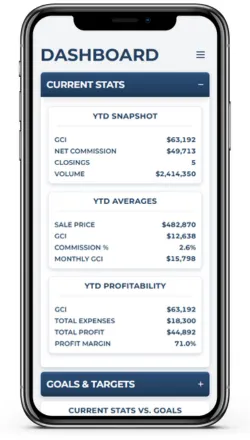
LEDGNT was designed specifically for real estate agents to track closings, expenses, and mileage in one place... so you can stay organized without adding more work to your day.
Learn more about LEDGNT at https://ledgnt.com
Subscribe to our Mailing List
Subscribe to be notified when new articles go live & receive helpful tips on running the financial side of your business.
RELATED ARTICLES
LEDGNT APP

Christian Tiessen
Christian is a financial strategist and the founder of LEDGNT, a platform designed to simplify financial tracking for real estate agents. He specializes in helping agents create clarity, organization, and consistency in their business finances.

LEDGNT is a financial tracking app built specifically for real estate agents to track closings, expenses, and mileage in one place.